53% of Indian Bank Customers Already Ask AI About Money. Is Your Bank Ready?
McKinsey's 2026 banking review finds India far ahead of the world in using generative AI for banking. What customers want, what banks must build, and what it means for bankers.
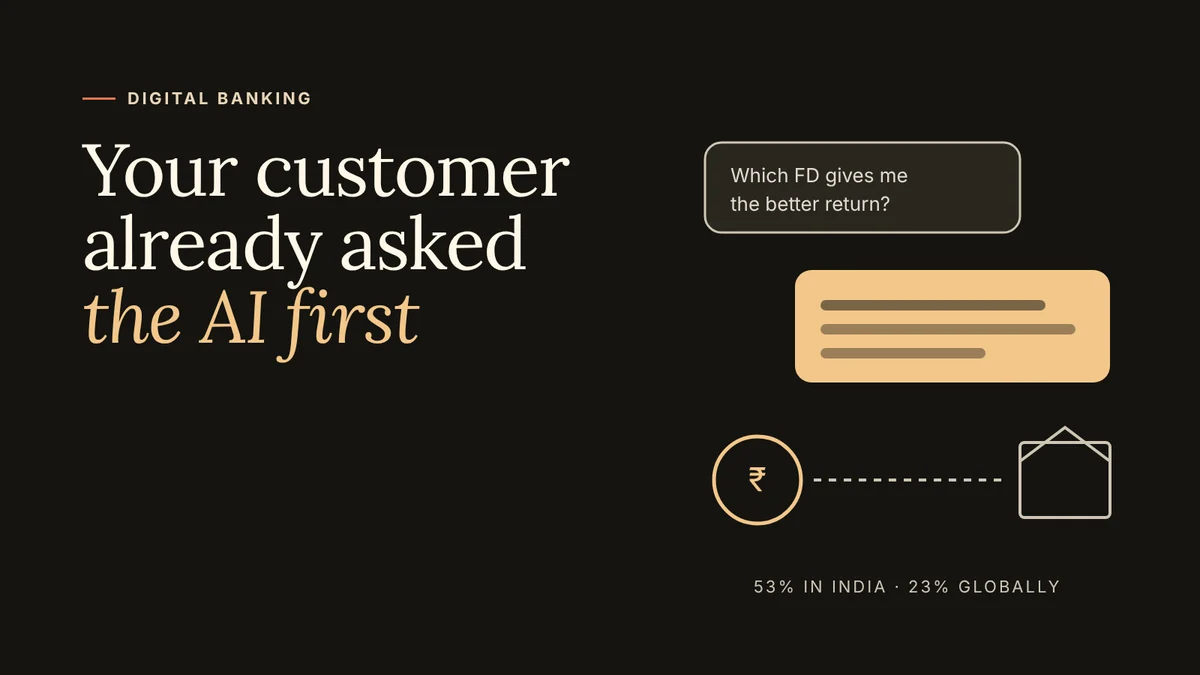
Ask a few people around you how they last checked a loan offer or compared two fixed deposits. More and more of them will say the same thing: "I asked ChatGPT first."
That habit now has a number. And India is far ahead of the rest of the world on it.
What McKinsey found
On 17 November, McKinsey released its Global Banking Annual Review 2026, titled "Precision with speed". As part of it, the firm surveyed about 46,000 retail banking customers across major markets.
One result stands out for India:
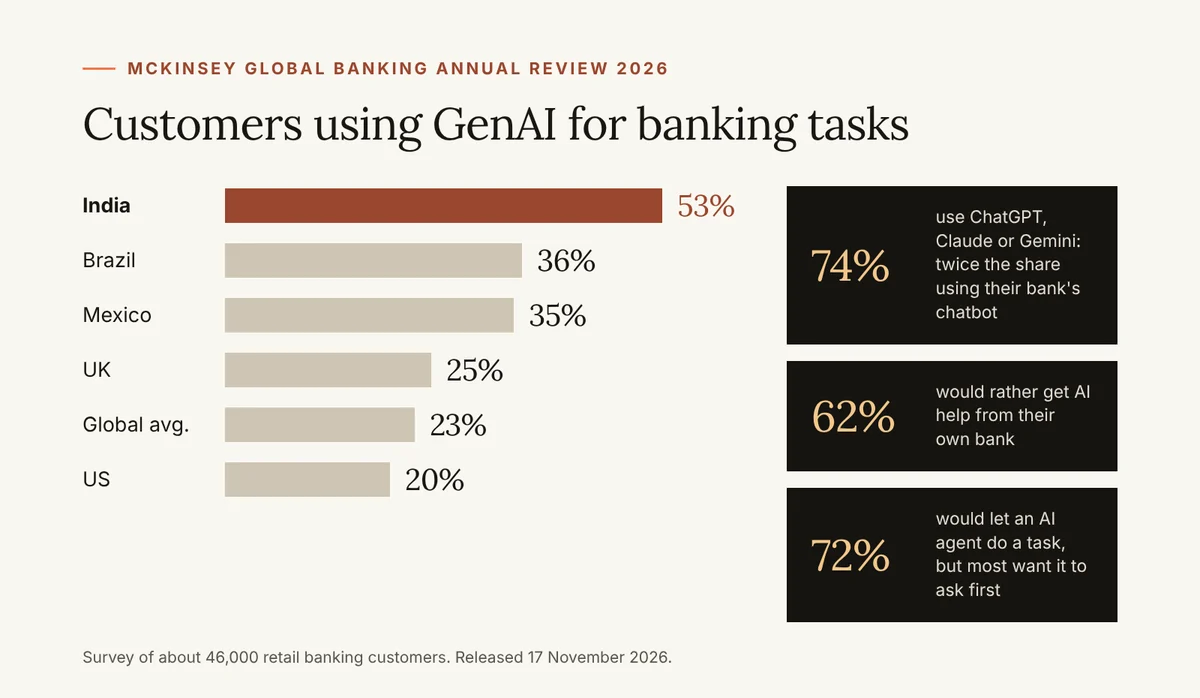
- 53% of surveyed customers in India use generative AI for banking-related tasks. The global average is 23%.
- India is ahead of Brazil (36%), Mexico (35%), the UK (25%) and the US (20%).
Look at what people are actually using:
- 74% of AI users worldwide rely on general tools such as ChatGPT, Claude or Gemini. That is about twice the share who use their own bank's chatbot.
So the customer is already talking to AI about money. Mostly, just not to the bank's AI.
Customers want the bank to do it, not someone else
This is the part that should make every bank pay attention:
- 62% of AI users would rather get AI services and advice from their primary bank than from another provider.
- About half say they might move to a third-party financial app if their bank does not offer capable AI services.
In other words, the trust is still with the bank. The tools are not.
McKinsey puts it in one line: "The transaction still comes to the bank; the conversation that shapes it is increasingly happening elsewhere."
Yes to AI, but with a hand on the brake
People are not asking for a machine that runs their money on its own. The survey shows something more careful:
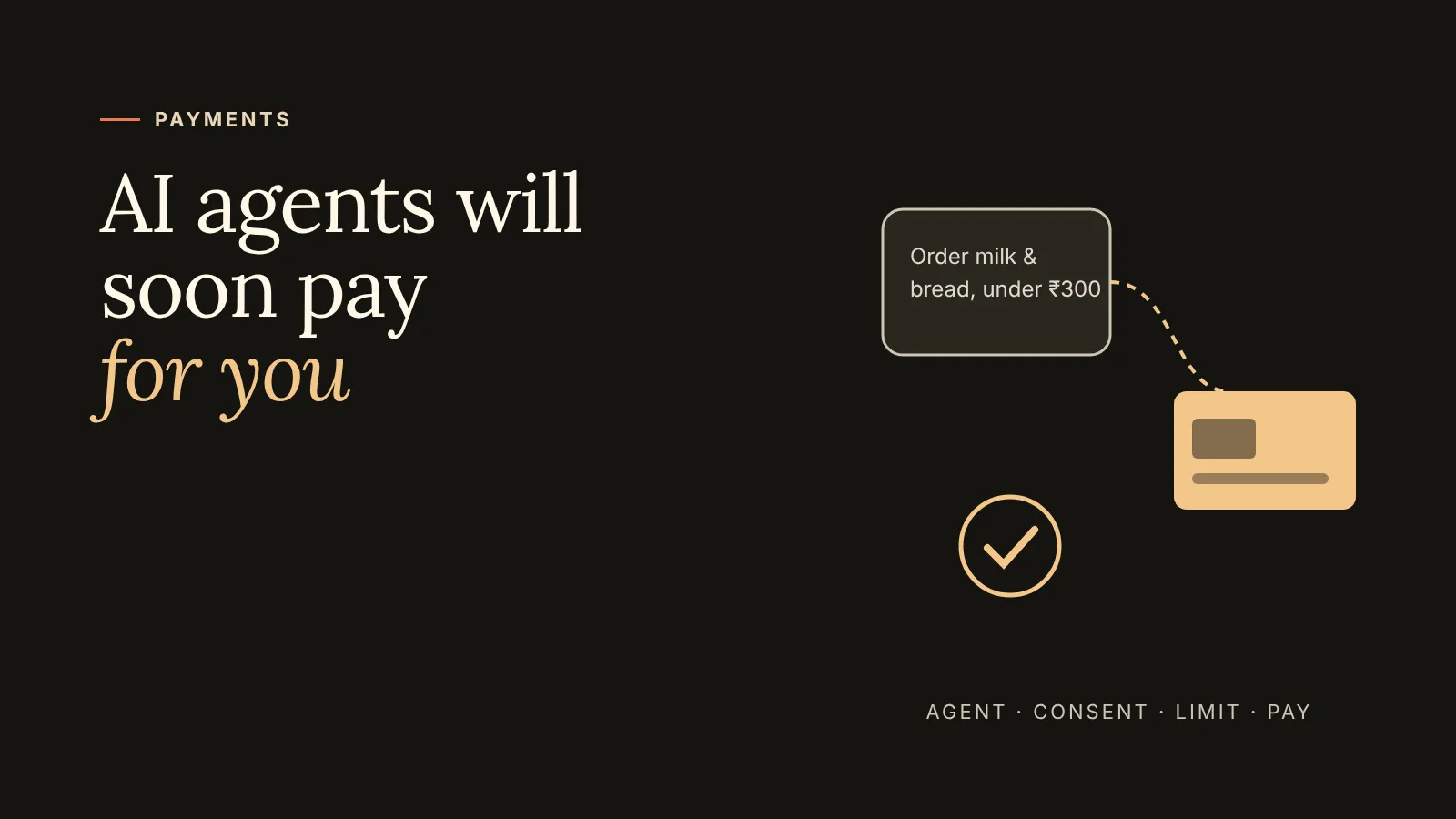
- 72% of AI users would let a banking AI agent carry out at least one financial task, but most want it to ask permission first.
- Most would cap what an agent can approve on its own at about $500.
- 59% are comfortable with AI for basic financial questions. Only 24% feel the same about investment advice, and 34% prefer a human advisor there.
- Two-thirds would still rather speak to a person than to a bank's voice agent.
- The biggest worry is privacy, named by 37%.
McKinsey's phrase for what customers want is a "capable deputy that asks for permission". Not an autopilot. A helper that does the legwork and checks with you before money moves.
What this means for banks
Read together, the numbers point to a few simple things:
- Build AI customers will actually use. If the bank's own assistant is weaker than a free chatbot, customers will keep going elsewhere for the conversation.
- Keep a human close. The same customers who like AI for quick answers still want a person for investments, complaints and anything that feels serious.
- Ask before acting. Any AI that can move money should confirm with the customer and work within limits the customer sets.
- Be open about it. RBI's FREE-AI framework already asks banks to have board-approved AI policies and to tell customers when they are dealing with AI.
McKinsey calls this a shift "from relationship banking to intelligence banking". The relationship still matters. It now has to come with good AI attached.
What this means if you work in a bank
For anyone at a branch or in a customer-facing role, two things follow.
First, your customers are arriving better prepared. Many will already have asked an AI tool about the product before they walk in. The value you add is in checking, explaining what applies to them, and catching what the tool got wrong.
Second, the human part of the job is not going away. The survey is clear that people want a person for advice, for big decisions and when something goes wrong. Being good with both, the customer and the AI tools, is the strongest place to stand.
A simple tip for customers
If you use a general AI tool to understand a banking product, use it to learn and to prepare questions. Do not paste your account numbers, card details, OTPs or personal documents into it. Confirm rates, charges and terms with your bank before you decide.
*Source: McKinsey Global Banking Annual Review 2026, released 17 November 2026, as reported by BFSI Network (Elets).*