How AI Is Changing MSME Loans in India: SBI's ₹1 Lakh Crore and What Comes Next
SBI used AI to underwrite nearly ₹1 lakh crore of MSME loans in FY26. How alternative data, ULI and Account Aggregator are reshaping small business credit, and the risks banks must manage.
For years, a small business owner without a long credit history or audited balance sheet found it hard to get a bank loan. AI is starting to change that, and India's largest bank has just shown how far it can go.
SBI: nearly ₹1 lakh crore underwritten with AI
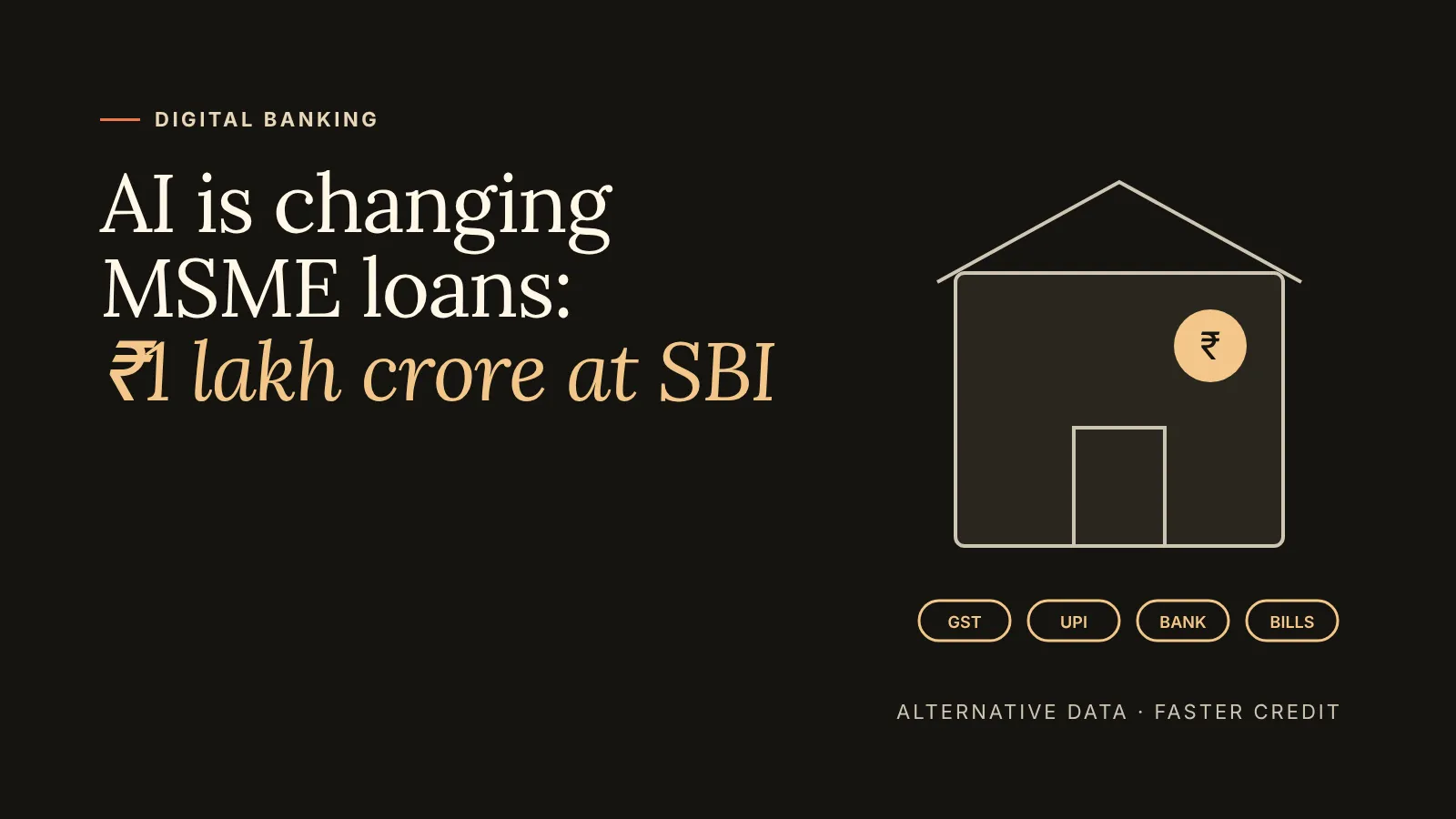
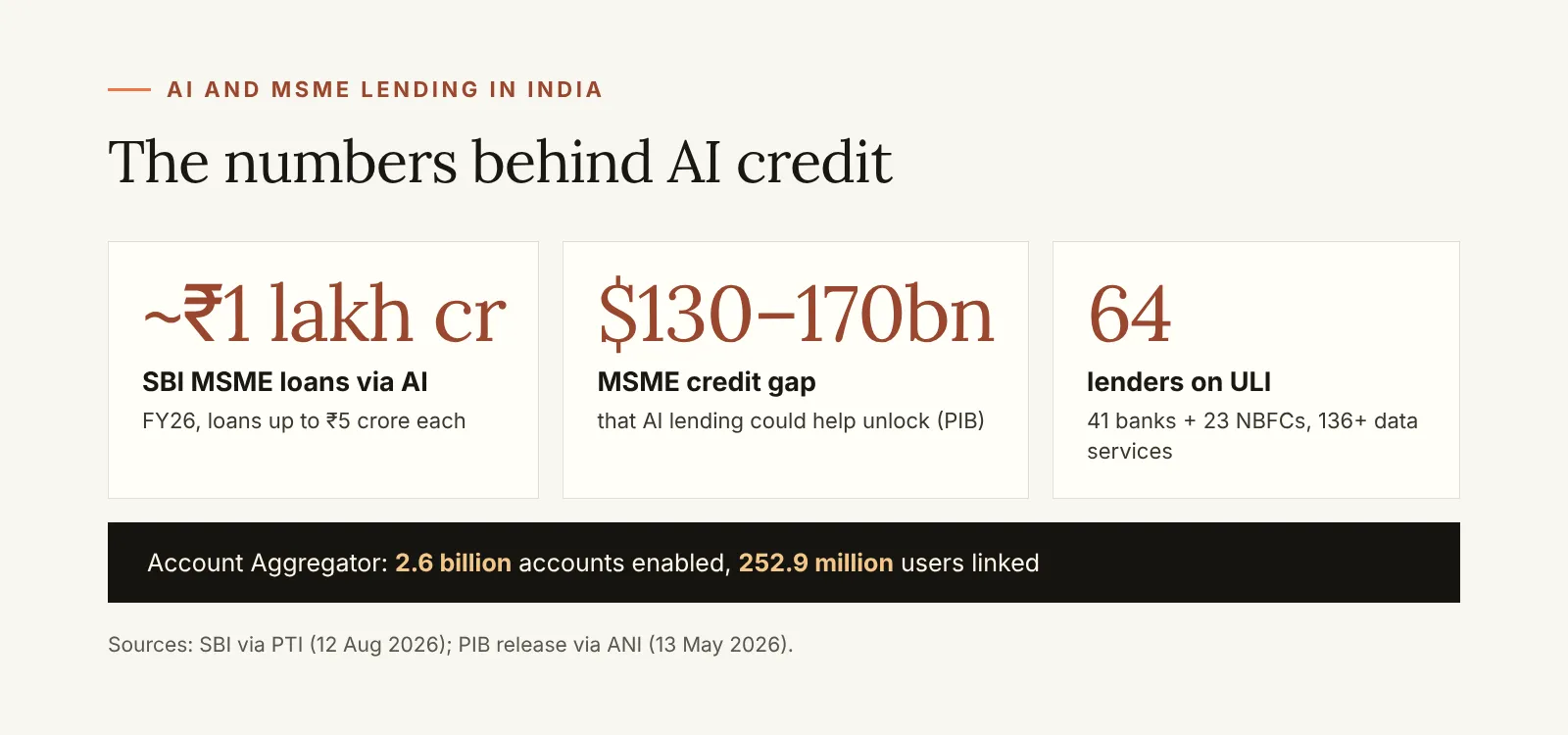
In August 2026, State Bank of India Managing Director Rama Mohan Rao Amara said SBI used AI to underwrite nearly ₹1 lakh crore of MSME loans in FY26.
- The loans were for amounts up to ₹5 crore each.
- They covered both new-to-bank and existing customers.
- AI has freed relationship managers from spending much time collecting data and doing preliminary analysis.
SBI also uses AI-based early warning signals, which scan sector, market and public information to flag risky loans before they turn bad. The bank uses AI across the customer journey: underwriting, portfolio management, fraud risk and customer service.
On cost, SBI was careful. Amara said putting a number on the reduction in its cost-to-income ratio "would take time", but the bank already sees better customer satisfaction and freed-up staff capacity.
Why this matters: a huge credit gap
According to a Government of India (PIB) release in May 2026, AI-powered lending could help unlock an MSME credit gap of an estimated USD 130–170 billion.
The key is alternative data. Instead of relying mainly on credit scores, AI models can look at:
- Digital payment transactions, including UPI.
- GST filings.
- Bank statements.
- Utility bill payments.
This helps first-time borrowers, small traders and informal workers who often have no traditional credit history.
The digital rails that make it possible
AI lending in India sits on top of public digital infrastructure:
- Unified Lending Interface (ULI): as of December 2025, 64 lenders (41 banks and 23 NBFCs) were onboarded, using 136+ data services across 12 loan journeys, including land records and satellite data.
- Account Aggregator: more than 2.6 billion accounts are enabled to share data with consent, and 252.9 million users have linked their accounts.
- Aadhaar, Jan Dhan and UPI, which give identity, accounts and a digital payment trail.
Together, these let a lender see a borrower's real business activity, with the borrower's consent, in minutes instead of weeks.
The risks banks must manage
AI lending is powerful, but it needs care:
- Bias and fairness. Models must not unfairly reject people from certain areas or groups.
- Explainability. A borrower who is rejected deserves a clear reason, and so does the regulator.
- Data consent and privacy. Data must be used only with permission and only for the stated purpose.
- Human oversight. RBI has said responsibility for AI-supported decisions stays with the bank, so people must still review and own the decision.
What this means for MSME owners
- Keep your GST filings, UPI collections and bank statements clean and regular. They now act as your credit history.
- Consider sharing data through the Account Aggregator framework when applying; it can speed up decisions.
- Pay utility bills and EMIs on time. Small habits now feed into credit models.
What this means for bankers
The relationship manager's job is shifting from collecting papers to understanding the business. AI does the first round of analysis; the banker adds judgement, builds the relationship and spots what the data cannot show. Bankers who can read an AI credit report, question it, and explain it to a customer will be the ones who grow in this new model.
*Sources: Outlook Business/PTI on SBI (12 August 2026); The Tribune/ANI on the PIB release on AI-driven MSME lending (13 May 2026); The420.in on RBI Governor's FIBAC remarks (11 August 2026).*