Bank fraud in India is changing shape. The number of cases has fallen sharply, but the money involved has gone up. At the same time, the Reserve Bank of India and the government are building AI systems to catch fraud faster than people can.
Here is what the latest numbers show, and the AI tools now being used to fight back.
The numbers: fewer cases, bigger losses
According to the RBI Annual Report 2025-26, released in May 2026:
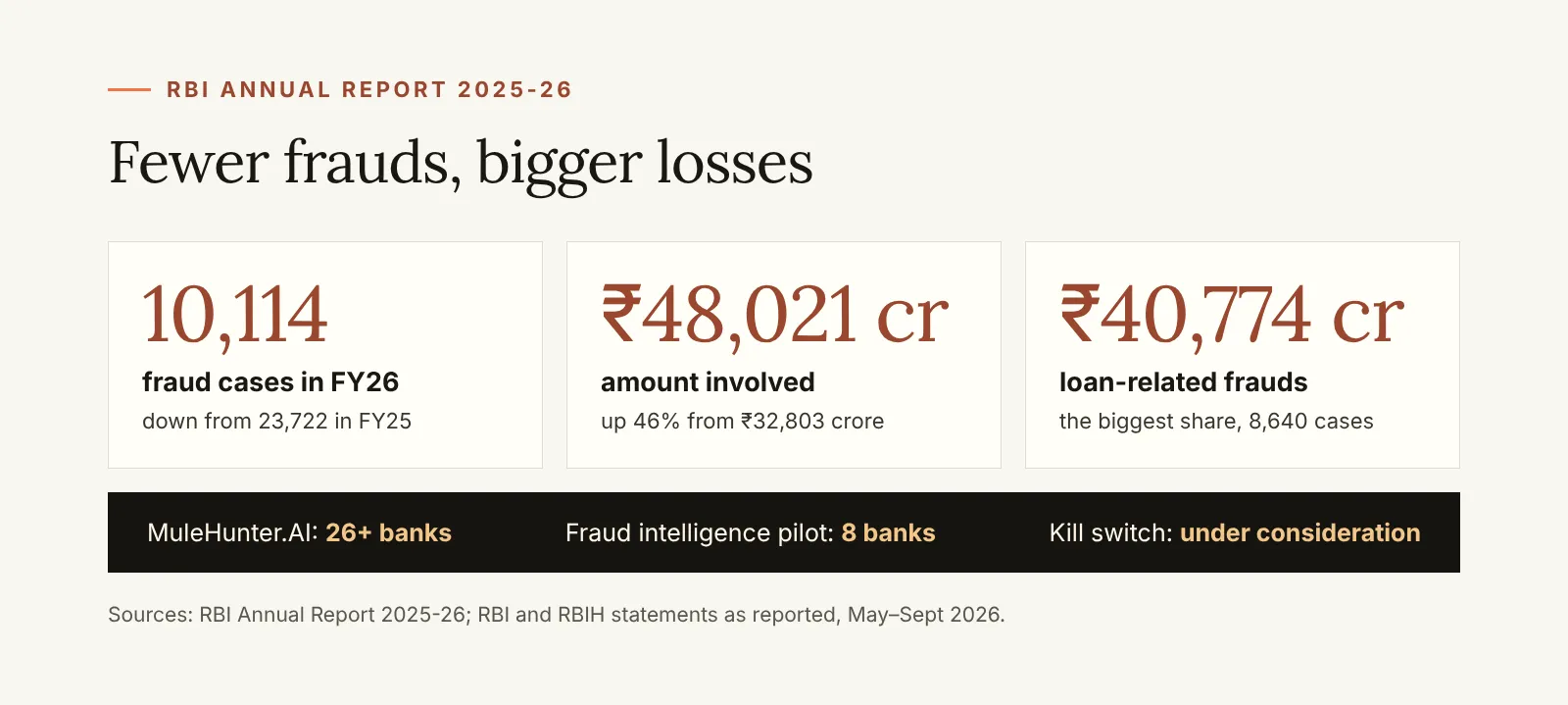
- Banks reported 10,114 fraud cases in FY26, down from 23,722 in FY25.
- But the amount involved rose 46%, to ₹48,021 crore, from ₹32,803 crore.
- Loan-related frauds made up most of it: ₹40,774 crore across 8,640 cases.
- Card and digital payment frauds reported to RBI were ₹29 crore across 293 cases, down from ₹517 crore in FY25.
Part of the jump in value comes from 314 older cases worth ₹30,199 crore that were reclassified in FY26. Even so, the message is clear: fraud is becoming more targeted and higher-value.
AI tool 1: MuleHunter.AI
A mule account is a bank account used to receive and move stolen money, often opened or rented in someone else's name. Catching mules early can stop a fraud before the money disappears.
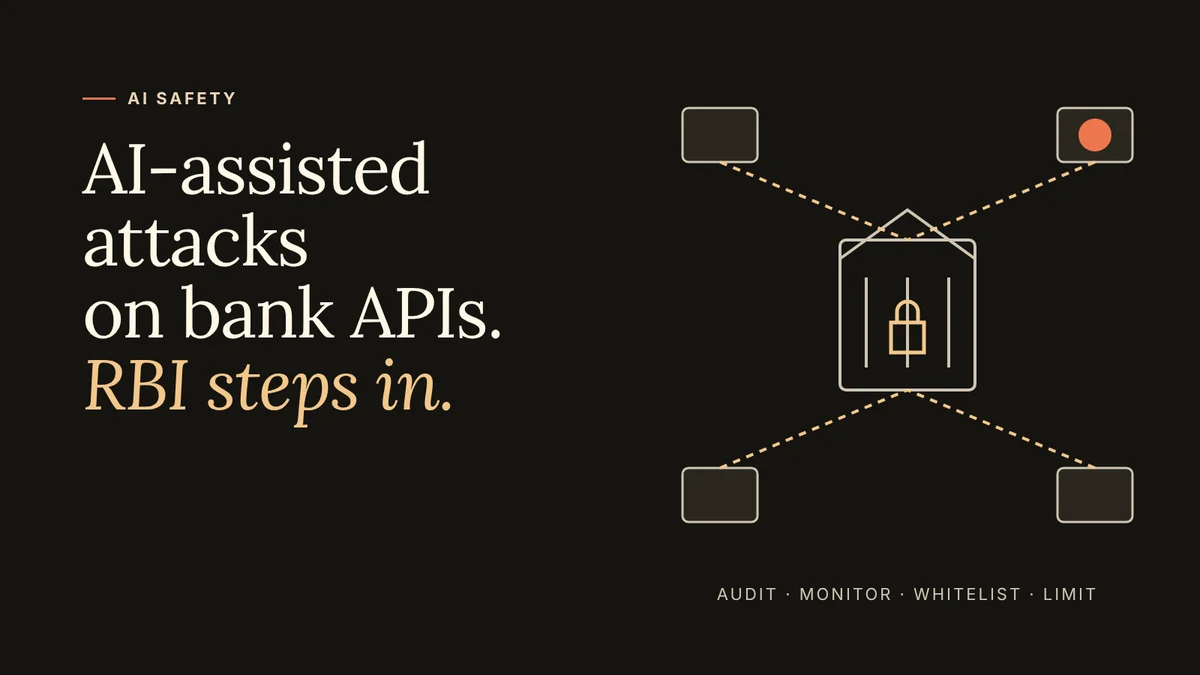
MuleHunter.AI, built by the Reserve Bank Innovation Hub (RBIH), uses AI and machine learning to spot such accounts. As of May 2026, it was being used by more than 26 banks.
In May 2026, the Indian Cyber Crime Coordination Centre (I4C) under the Home Ministry and RBIH signed an MoU. As reported, it will feed data from I4C's Suspect Registry into RBIH's AI fraud detection tools, so banks can catch mule accounts using information from cybercrime complaints.
AI tool 2: a shared fraud intelligence platform
In August 2026, at FIBAC in Mumbai, RBI Governor Sanjay Malhotra spoke about a Digital Payment Intelligence Platform to help banks detect and prevent fraud across digital payments, and work together against new fraud methods.
In September 2026, Deputy Governor Shirish Chandra Murmu said the India Digital Payment Intelligence Corporation (IDPIC), set up in consultation with RBI, is "already running on a pilot basis in eight banks", and that RBI is trying to expedite it. It will share real-time fraud alerts between banks using AI, machine learning and big data. No full rollout date has been announced.
The idea is simple. A fraudster who is blocked at one bank should not be able to move straight to the next.
AI tool 3: a "kill switch" for customers
RBI is also looking at giving customers more control. As reported in May 2026, it is considering:
- A universal switch on / switch off facility for digital payment modes.
- A kill switch that would let customers instantly block all debit transactions from their account if they suspect fraud.
- More safeguards against authorised push payment fraud, where a customer is tricked into sending money themselves.
These are proposals under consideration; no final decision or timeline has been announced.
What RBI expects from banks using AI
At FIBAC, the Governor also set out what banks should do as they use more AI:
- Keep a full inventory of the AI models they use.
- Adopt a board-approved AI governance policy.
- Build red-team and stress-testing capability.
- Keep human oversight of AI-supported decisions. Responsibility stays with the bank.
What this means for customers
- Turn on SMS and email alerts and read them.
- Never rent or lend your bank account to anyone. Mule accounts are now being tracked by AI, and account holders can face legal trouble.
- If you suspect cyber fraud, call 1930 or report it at cybercrime.gov.in immediately. The faster you report, the better the chance of freezing the money.
What this means for bankers
Fraud prevention is no longer only the job of one department. Account opening, KYC, limits, alerts and customer education all play a part. Bankers who understand how AI flags suspicious accounts, and who can explain it calmly to customers, will be valuable in every branch.
*Sources: RBI Annual Report 2025-26 as reported by Free Press Journal (29 May 2026); The420.in on the RBI Governor's FIBAC speech (11 August 2026); Free Press Journal/IANS on IDPIC (18 September 2026); Business Today on the I4C–RBIH MoU (12 May 2026).*